Construction control
Recipe-defined preparation keeps jacket, foil, braid, and conductor work aligned to the cable construction.
Technology // live production system
Frisimos brings patented miniature robotics, laser cutting, computer vision, machine learning, and AI into the physical sequence that turns bulk cable into a finished connector assembly.
Cable assembly intelligence
Strip a jacket without nicking the conductors. Manage foil and braid. Separate, untwist, align, trim, insert, crimp, and stage eight tiny colored wires.
Frisimos turns those dependent operations into a controlled sequence that ends with a documented finished cable, ready for the next stage of the customer program.
Inside a finished cable
Automation sequences the cable through preparation, wire handling, termination, and connectivity testing. Each point is designed around the construction, connector, and test requirements of the finished-cable program.
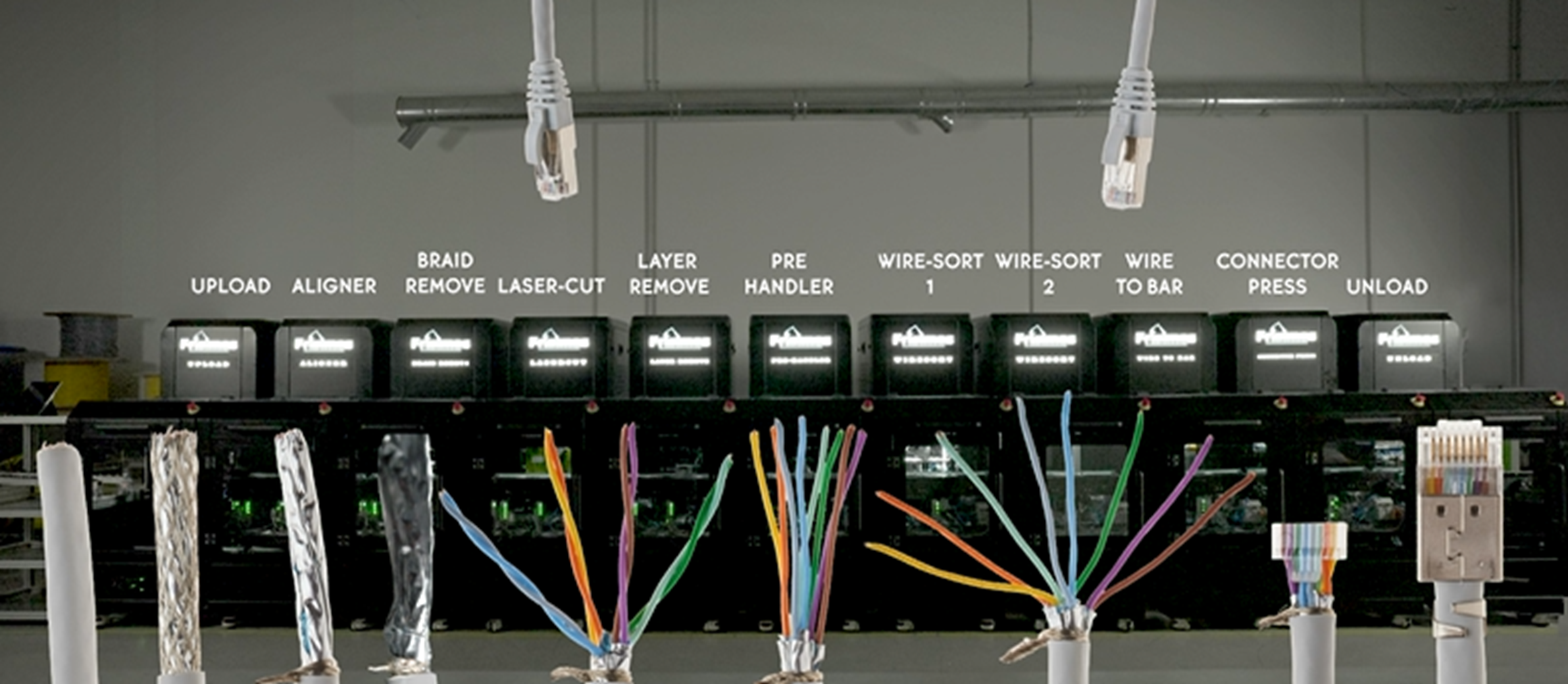
Controlled feeding, cut-to-length, jacket preparation, and foil or braid work establish the required cable construction.
Conductors are untwisted, straightened, and arranged to the specified color sequence. Vision checks the sequence and strip length in process.
Guided connector assembly and force-monitored crimping control the electrical connection and mechanical strain relief.
Continuity and short testing support in-line connectivity testing before finished-cable completion. Test results can link to each product’s barcode.
Move from controls to program
Bring a cable construction, connector, and test need into the conversation.The system behind the cable
The sequence above shows the cable-level work. This production view shows how the coordinated system carries that work from cable intake through a tested, documented finished output.
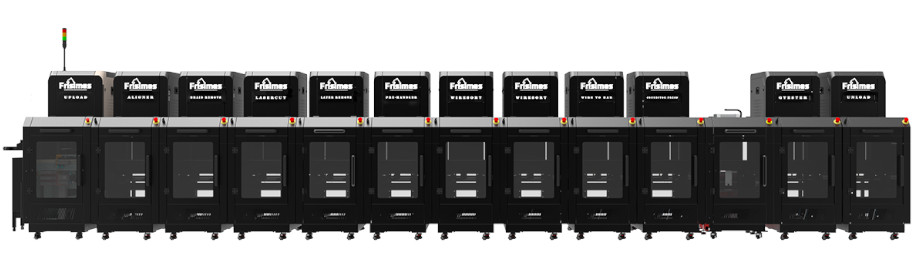 CONNECTED CABLE PROCESS
Preparation, wire handling, connector work, inspection, in-line connectivity testing, and unload stay connected to the same defined product path.
Built-in control points
Recipe-defined preparation keeps jacket, foil, braid, and conductor work aligned to the cable construction.
Computer vision can check wire color sequence, strip length, and post-crimp integrity while the cable moves through the process.
Connector pressing and crimping are monitored at the critical point where electrical contacts and strain relief are made.
Pin-to-pin connectivity testing supports a documented product path, with quality results linked to the individual product record.
Technology applied in the U.S.
The result is a production model centered on BABA-ready supply, 100% inline connectivity testing, traceability, and flexible manufacturing partnerships.